From Fighter Jets to CYBERSIGHT: The Evolution of Heads-Up Display Technology
Heads-up display (HUD) technology is often associated with advanced vehicles or futuristic devices. In reality, HUD systems were created to solve a practical problem: how to keep people focused on what matters while moving at high speed.
From fighter aircraft in the mid-20th century to modern sports wearables like CYBERSIGHT HUD glasses, the idea has remained consistent—display critical information without forcing the user to look away from their path.
Military Origins: HUD in Fighter Aircraft
The earliest heads-up display systems appeared in military aviation during the 1940s.
Pilots flying early fighter aircraft faced a challenge known as task saturation. They had to monitor multiple cockpit instruments while simultaneously tracking targets and navigating at high speeds. Every time a pilot looked down at a gauge, they lost valuable time and situational awareness.
To solve this problem, engineers developed a system that projected flight data onto a transparent glass panel positioned in front of the pilot. Speed, altitude, and targeting information appeared directly in their line of sight.
This innovation allowed pilots to maintain visual focus on the sky while still accessing critical flight information. In combat environments, reducing the need to shift focus between instruments and the outside world significantly improved reaction time.

HUD Technology Moves to Everyday Driving
By the late 1980s, heads-up display systems began appearing in consumer vehicles.
Automotive engineers recognized a similar issue in everyday driving: distraction caused by checking dashboard instruments. When a driver traveling at 100 km/h looks down at the speedometer for just one second, the vehicle can travel more than 30 meters without the driver watching the road.
HUD systems addressed this by projecting speed, navigation directions, and alerts onto the windshield. This allowed drivers to keep their eyes on the road while still accessing essential information.
Another advantage was visual focus. Because the projected information appeared farther away than traditional dashboard instruments, drivers did not need to constantly refocus their eyes between near and distant objects.
Today, heads-up displays are commonly used in premium vehicles as a way to improve both safety and driving awareness.

HUD Enters the World of Sports Technology
As wearable technology evolved, developers began exploring how heads-up displays could be used outside vehicles and aircraft.
Endurance sports such as cycling and running present similar challenges. Athletes often rely on devices like bike computers or sports watches to monitor metrics such as speed, pace, heart rate, and navigation.
However, checking these devices requires looking down or shifting attention away from the road or trail. During fast rides or technical terrain, this momentary distraction can interrupt rhythm or reduce situational awareness.
This is where HUD-based sports wearables began to emerge.
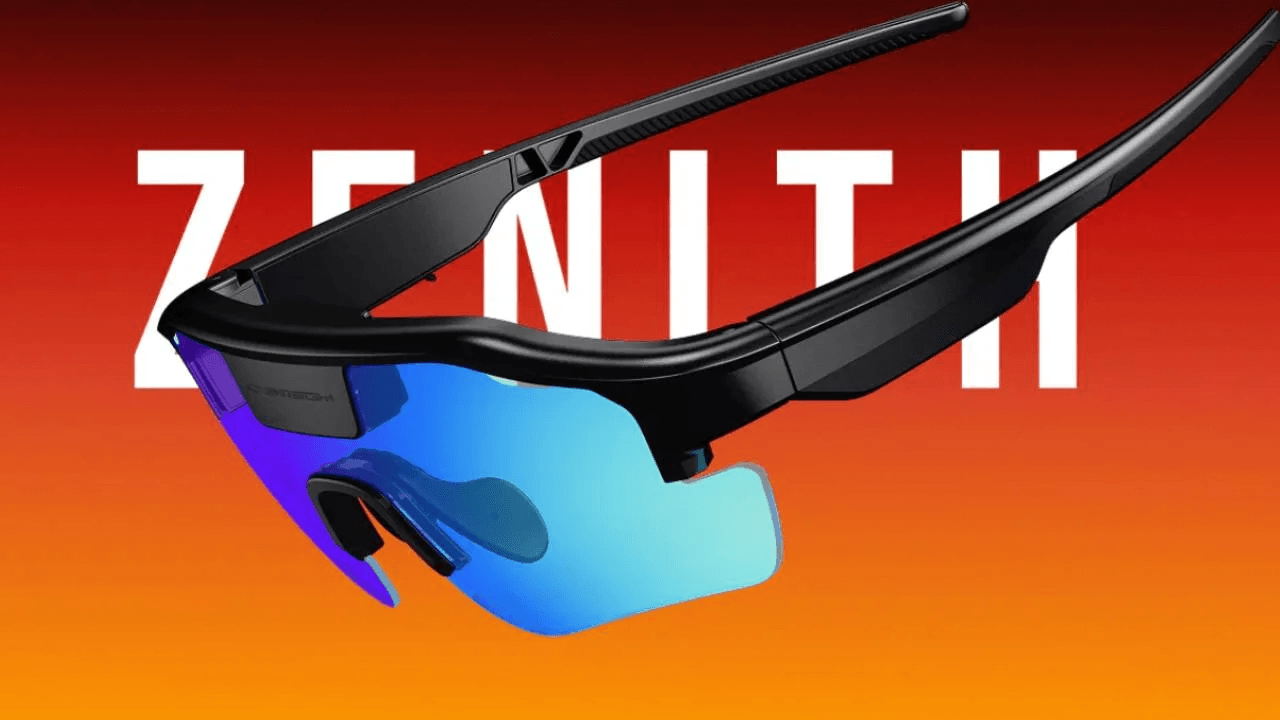
CYBERSIGHT HUD Glasses
CYBERSIGHT introduced its first generation of HUD sports glasses in 2025.
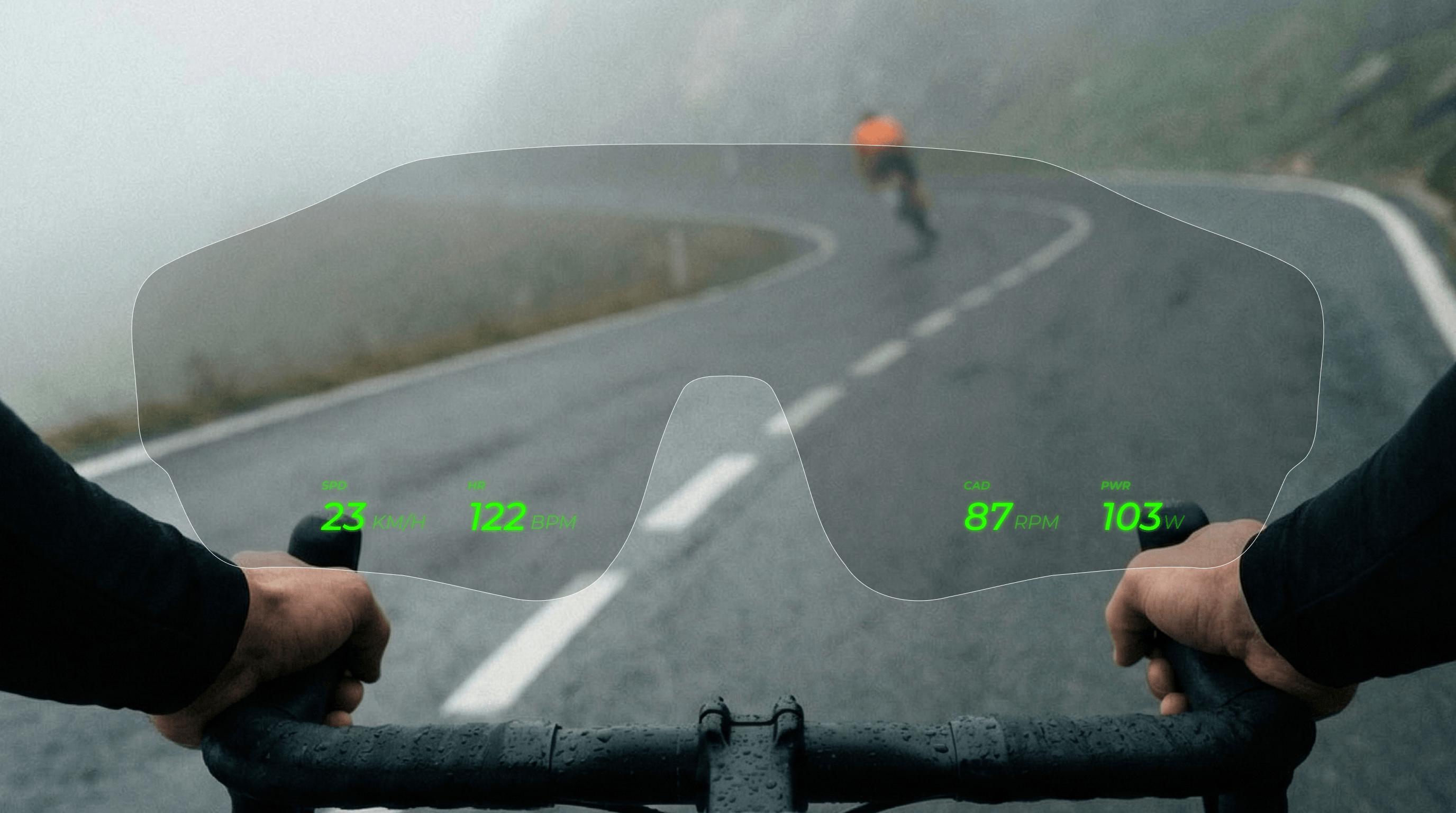
Weighing approximately 39 grams, the glasses use a monochrome waveguide optical system to project information within the user’s field of view. Instead of checking a handlebar display or wrist device, athletes can see performance data while maintaining their natural head position.
For cyclists and runners, this means metrics such as:
-
Speed
-
Pace
-
Heart rate
-
Power output
-
Navigation cues
can appear within view without interrupting movement.

Maintaining Rhythm During Training
For many endurance athletes, maintaining rhythm is essential.
Looking down repeatedly at a watch or bike computer can break concentration and disrupt pacing. During technical cycling or trail running, it may also reduce balance and environmental awareness.
HUD glasses offer a different interaction model. By placing key data near the athlete’s natural line of sight, the information becomes accessible without requiring large head or eye movements.
This allows athletes to stay focused on their surroundings while still monitoring performance data during training sessions.
Awareness on the Road
Cyclists in particular face additional challenges when sharing roads with vehicles.
HUD systems can support awareness by displaying alerts or information from connected sensors. Instead of constantly turning their head or checking devices, riders can receive visual notifications within their field of view.
This approach helps athletes remain more aware of their environment while maintaining control of the bike.

From Military Technology to Wearable Tools
The history of heads-up display technology reflects a gradual shift—from large, specialized military systems to lightweight tools used in everyday activities.
Today, the same principle that once helped pilots maintain situational awareness in the air is being adapted for athletes on the road and trail.
By bringing performance data directly into the athlete’s line of sight, HUD technology continues to evolve as a new interface between humans, information, and movement.
About CYBERSIGHT
Founded in Singapore in 2024, CYBERSIGHT is a sports technology company focused on developing heads-up display solutions for athletes.
Following a successful crowdfunding campaign, the company released its first generation of HUD sports glasses in 2025. CYBERSIGHT has also presented its optical projection system at major industry events including Eurobike 2025 and CES 2026.
By combining wearable optics with real-time performance data, CYBERSIGHT aims to provide cyclists, runners, and outdoor athletes with a new way to stay informed while staying focused on the path ahead.
Share